Our View of the World through the Lens of Jesus Christ
Blessed be the God and Father, our Lord Jesus Christ! By his great mystery we have been born anew to a living hope through the resurrection of Jesus Christ from the dead, and to an inheritance which is imperishable, undefiled and unfading, kept in heaven for you, who by God’s power are guarded through faith for a salvation ready to be revealed in the last time.
“In this, you rejoice, though now for a little while you may have to suffer various trials, so that the genuineness of your faith, more precious than gold which through perishable is tested by fire, may redound to praise and glory and honor at the revelation of Jesus Christ. Without having seen him, you love him; Though we do not now see him, you believe in him, and rejoice with unutterable and exalted joy. As the outcome of your faith, you obtain the salvation of your souls” (1 Pt 1:3-9).
In his first Epistle, St. Peter reminds us of the centrality of our faith in Jesus Christ. In Christ, we received the gift of faith in baptism and the path toward salvation through Jesus’ death and resurrection. As the Word made flesh (Incarnation), the Word of God took on human form, where the only-begotten Son, Jesus Christ, revealed the love of God through the life, death, and resurrection of the Son. Our Catholic faith is associated with both joy and suffering, reflecting the life of Christ.
The Catechism of the Catholic Church reminds us that we can know God with certainty and that He desires to constantly reveal Himself and make known the mystery of his will (Catechism of the Catholic Church 50-51). The origin and identity of our Catholic faith comes from the Father, revealed through the Son and confirmed by the Holy Spirit. Our identity is rooted in the Trinity and specifically the Son of God, Jesus Christ, as the Word made flesh.
Because we are made in the image and likeness of God, out of love, our identity as sons and daughters reflects the love of the Father as revealed through the Son. Our view of the world reflects this love and is
revealed in the Church Jesus established on earth, the Catholic Church. In and through Christ, Jesus came to save and restore our relationship with God the Father, and willingly offered himself to be crucified for the salvation of the world and the destruction of sin and death. Jesus’ death and resurrection opened the path toward our salvation and revealed the love of God more intimately. Jesus reminds us that suffering has a redemptive value because it prepares us for our eternal reward, heaven, if we freely choose this path. The Church was established by Christ to show us the way to heaven. In the end, Jesus wants to view the world through a Catholic lens and participate in his life on earth through the sacramental life of the Church, and become partakers of the divine nature. In his second Epistle, St. Peter reminds us of our participation in the life of the Church and the importance of viewing the world through the lens of Christ.
“His divine power has granted to us all things that pertain to life and godliness, through the knowledge of him who called us to his own glory and excellence, by which he has granted to us his precious and very great promises, that through these you may escape the corruption that is in the world because of passion, and become partakers of the divine nature” (2 Pt 1:3-4).
The Proclamation of the Good News of Jesus Christ
The Good News of Jesus Christ must be both witnessed, proclaimed, and lived. Without this threefold approach, the prospect of the message of salvation penetrating the hearts and minds of the faithful is left to wane and wonder. In the Decree from the Second Vatican Council, Ad Gentes, on the missionary activity of the Church, we are reminded of the following,
Wherever God opens a door of speech for proclaiming the mystery of Christ (cf. Col. 4:3), there is announced to all men (cf. Mark 16:15; 1 Cor. 9:15; Rom. 10:14) with confidence and constancy (cf. Acts 4:13, 29, 31; 9:27, 28; 13:46; 14:3; 19:8; 26:26; 28:31; 1 Thess. 2:2; 2 Cor. 3:12; 7:4; Phil. 1:20; Eph. 3:12; 6:19, 20) the living God, and He Whom He has sent for the salvation of all, Jesus Christ (cf. 1 Thess. 1:9-10; 1 Cor. 1:18-21; Gal. 1:31; Acts 14:15-17, 17:22-31), in order that non – Christians, when the Holy Spirit opens their heart (cf. Acts 16:14), may believe and be freely converted to the Lord, that they may cleave sincerely to Him Who, being the “way, the truth, and the life” (John 14:6), fulfills all their spiritual expectations, and even infinitely surpasses them. This conversion must be taken as an initial one, yet sufficient to make a man realize that he has been snatched away from sin and led into the mystery of God’s love, who called him to enter into a personal relationship with Him in Christ. (Ad Gentes, 13).
An essential aspect of the proclamation of the Gospel is the need for prudential urgency in proclaiming and promoting the Good News of Jesus Christ. St. John Paul II reminds us of this urgency in his encyclical
Redemptoris Missio: On the permanent validity of the Church’s missionary mandate, where he describes the approach to evangelization as follows,
The urgency of missionary activity derives from the radical newness of life brought by Christ and lived by his followers. This new life is a gift from God, and people are asked to accept and develop it if they wish to realize the fullness of their vocation in conformity to Christ. The whole New Testament is a hymn to the new life of those who believe in Christ and live in his Church. Salvation in Christ, as witnessed to and proclaimed by the Church, is God’s self-communication: “It is love which not only creates the good, but also grants participation in the very life of God: Father, Son and Holy Spirit. For he who loves desires to give himself” (Redemptoris Missio, 7).
Jesus Christ is a gift of the Father’s love for us and constitutes both the content and the method of our evangelization efforts. The Good News is indeed good, for it comes from God and his desires for us to be united with Him through His Son, Jesus Christ. The message of the Gospel of Jesus Christ is,
- The message of Salvation
- The message of Redemption
- The message Hope
- The message of Eternal Life with God the Father in heaven.
St. John reminds us that Jesus is the way, the truth, and the life (Jn 14:6). Jesus is the way to God the Father and our eternal home. This is the Good News of Jesus Christ.
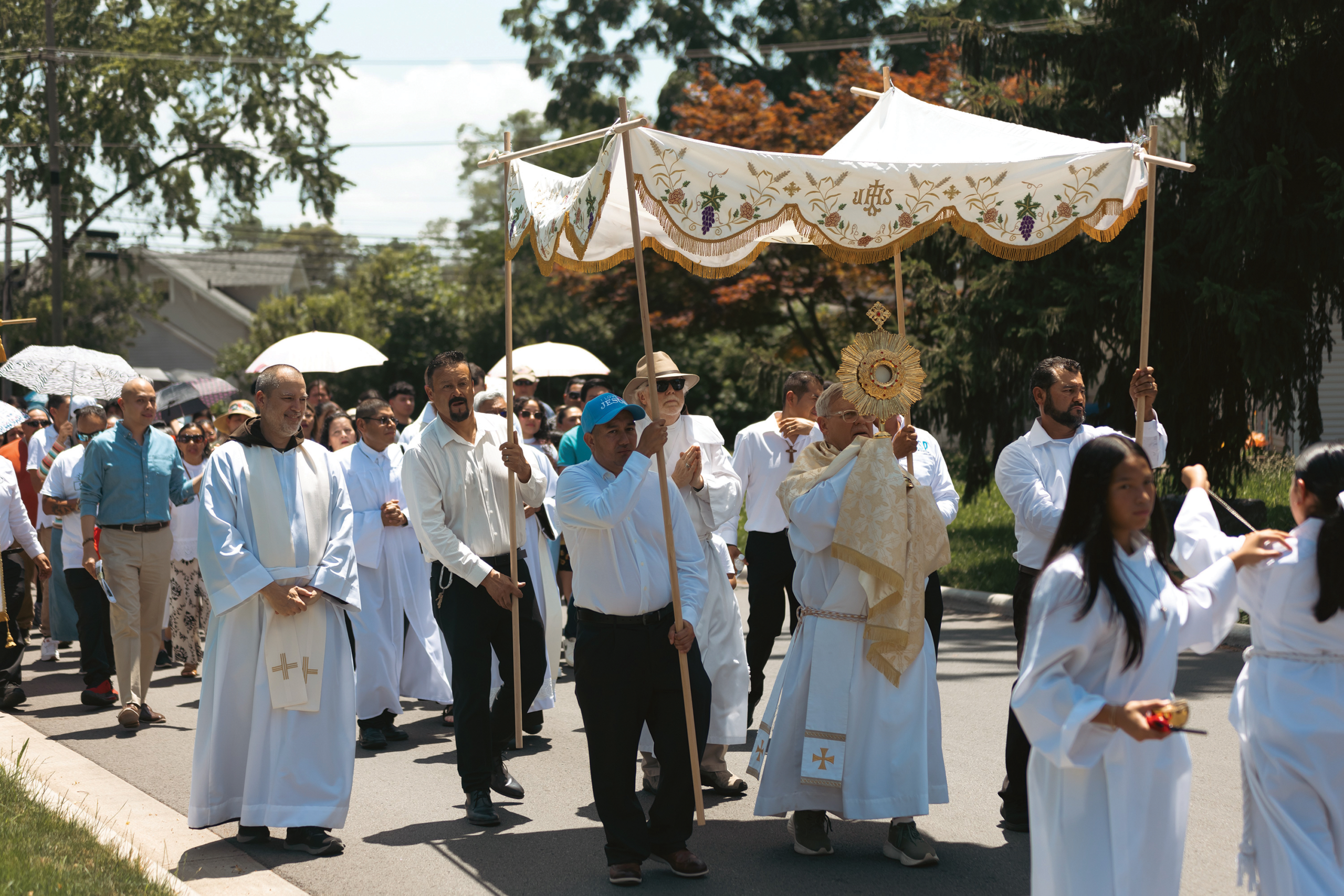
We are One Family in Jesus Christ
From the moment God created Adam and Eve, we were incorporated into God’s family as his children made in His image and likeness. The development of the family of God throughout history reveals God’s desire to share His love with us and to help us know and understand Him more intimately through His outpouring love. The Catechism reinforces this point, where it describes the family of God as gradually being formed and taking shape during the stages of human history, in keeping with the Father’s plan. In fact, already present in figure at the beginning of the world, this Church was prepared in marvelous fashion in the history of the people of Israel and the old alliance. Established in this last age of the world and made manifest in the outpouring of the Spirit, it will be brought to glorious completion at the end of time (Catechism of the Catholic Church, 759).
The role of the family within salvation history takes center stage with the birth of Jesus Christ, the Son of God, who is the Word made flesh, the only-begotten Son of God. Understanding the nature of Christ as being both fully human and fully divine, Jesus demonstrates the necessity of the family through the institution of the Church on earth. As the family of God, it is important to know and understand that the world was created for the Church (Catechism of the Catholic Church, 760). The relationship of the Church instituted by Christ as the bride reflects our relationship with Christ as one family in His name. The Church is nothing other than the family of God. Becoming a disciple of Jesus Christ means accepting the invitation to belong to God’s family, to live in conformity to his way of life (Catechism of the Catholic Church, 2233).
God did not create you because He had any need of you, for you are wholly useless to Him, but only that He might exercise towards you His goodness, bestowing on you His grace and glory. To accomplish this, he has given you an understanding to know Him, a memory to remember Him, a will to love Him, an imagination to recall His mercies, eyes to see the wonders of His works, a tongue to praise Him, and so with all your other faculties. Therefore, being created and placed in the world for this purpose, you should avoid and reject all actions which are contrary to it; and despise as idle and superfluous all which do not promote it.
St. Francis De Sales, Introduction to the Devout Life